We are delighted to launch our 2023-24 ‘Author Interviews’ series by speaking with historian of medicine and the mind sciences, Joelle M. Abi-Rached.
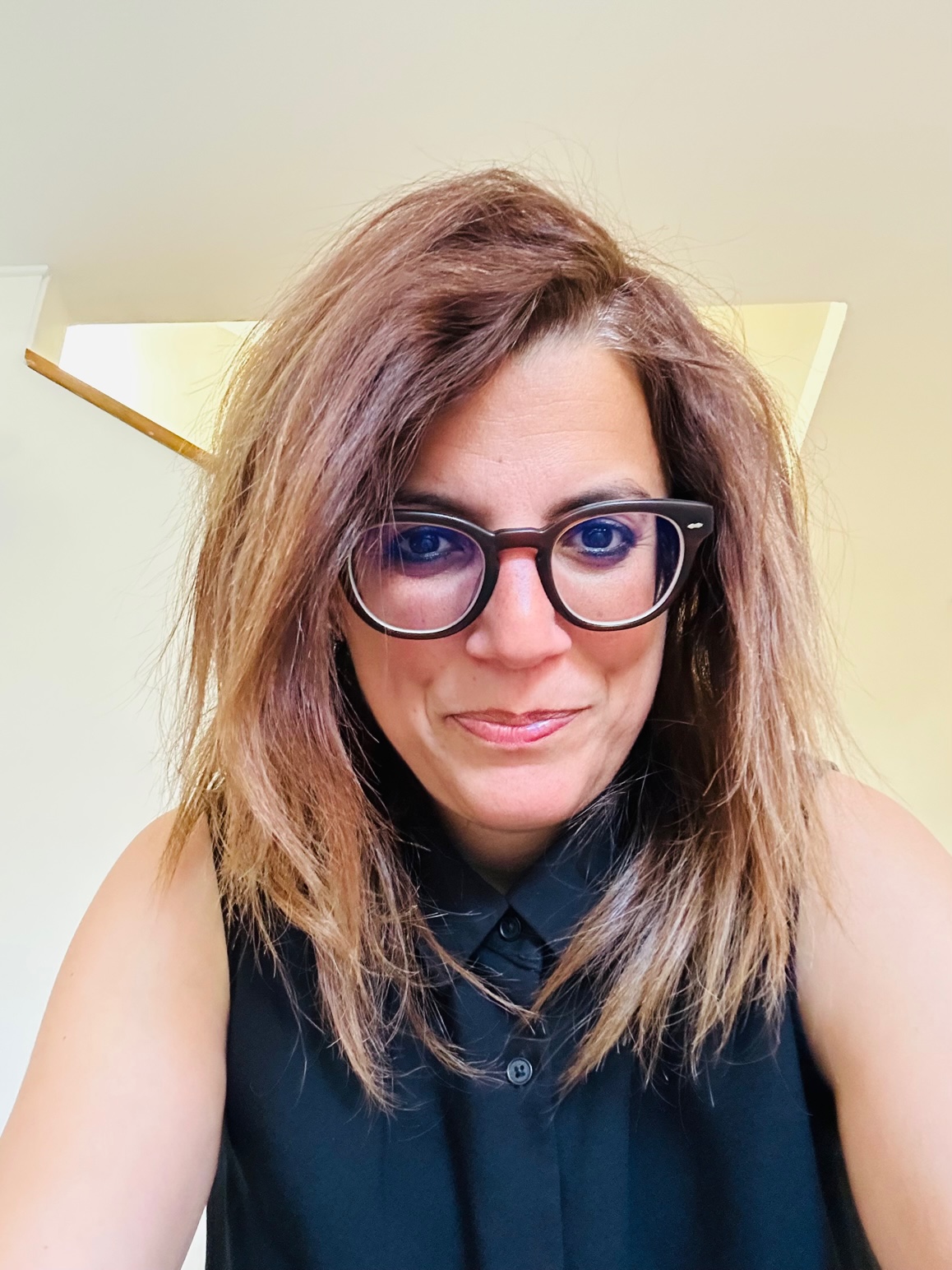
Abi-Rached’s latest book is ‘Asfuriyyeh: A History of Madness, Modernity, and War in the Middle East (MIT Press, 2020). The book centers on ‘Asfuriyyeh (formerly, the Lebanon Hospital for the Insane), one of the first modern mental hospitals in the Middle East. By using the rise and fall of ‘Asfuriyyeh as a starting point, the author explores the development of modern psychiatric theory and practice in the Middle East as well as the sociopolitical history of modern Lebanon. In so doing, she calls for a new “ethics of memory.” Her work invites a number of reflections: about the de-centering of trauma discourses; about the need for a plurality of approaches; about the politics of the archive. Perhaps most importantly, it calls for a (much-needed) historicization, problematization, and re-politicization of psychiatry past and present.

Abi-Rached, who obtained her Ph.D. in the History of Science at Harvard, also incorporates in her work her training as a medical doctor and a philosopher. At Columbia, Sciences-Po (Paris), and Harvard, her teaching and research have focused on the history of psychiatry, medicine, and global health. In addition to ‘Asfuriyyeh: A History of Madness, Modernity, and War in the Middle East (MIT Press, 2020), she is the co-author, with Nikolas Rose, of Neuro: The New Brain Sciences and the Management of the Mind (Princeton University Press, 2013). In 2023-24, Joelle is the Mildred Londa Weisman Fellow at the Radcliffe Institute for Advanced Study at Harvard University, where she is working on her next book project, tentatively entitled The Resilient Society: A History of Violence, Colonialism, and Our Psychiatric Present.
We are grateful to Joelle for speaking with us about archives, asylums, and the afterlives of colonialism.
Interviewed by Alexandra Bacopoulos-Viau
Joelle, how did your interest in the history of psychiatry develop?
To put it very candidly, living in Lebanon always felt like living in a big psychiatric hospital. And I am not being sarcastic, rhetorical, or even provocative. And I am afraid to confess that this is a widely shared feeling. Perhaps I should start with my childhood. What struck me growing up was the disturbing, indeed perplexing, dissonance between two visions of the world I was confronted with. On the one hand, at my Jesuit school (which was in a rural area in Lebanon), I was presented with a utopian vision of the world imbued with humanism, liberalism, freedom, progressive ideas, and a sense of faith in the “human” (l’humain); basically, the sort of idealistic vision of the world you could receive in Paris. On the other hand, I was incessantly confronted with an antipodal view of the world — politically unstable, violent, patriarchal, religious, sectarian, and deeply conservative.
I spent an unusual childhood having to flee the country or home because of the civil war, communitarian fears, and the violence that had engulfed Lebanon since 1975 and lasted until 1990, though it must be said that political assassinations, the terrorization of the civilian population and oppression persisted, indeed intensified, under the so-called “Pax Syriana.” Threats seemed to be ubiquitous and socio-political instability constant. Curiously, it is only recently that I have come to realize that like the hundreds of thousands who fled Lebanon during the civil war I was part of a generation that was considered the “new boat people” because we fled en masse to Cyprus by boat before seeking other safe havens. As a child, of course, I could not comprehend the complexity of these endless wars, the senseless violence, or all the actors involved in these unfathomable conflicts that kept erupting and disturbing my childhood. In fact, with hindsight I don’t think I even had a “normal” adolescence. In that part of the world, we are thrown into adulthood at a very early age; we are confronted with scenes of vicious violence, lawlessness, hopelessness, and chaos.
To cut a long story short, what was becoming clear in my mind was the striking discordance between the world depicted in the books and the world as it was lived outside the classroom: chaotic, precarious, and brutal. It was common to say colloquially that we lived in an “Asfuriyyeh.” Everybody knew what it meant: a state of bedlam, dysfunctionality, irrationality, basically a state of utter chaos where nothing made sense. This is how I first encountered the term. And this is how madness and its history initially triggered my imagination. Little did I know at the time that this was in fact the name of a real hospital that had existed and whose history I would end up reconstructing and recovering in my most recent book.
During my first year of medical school, a philosopher of mind at the American University of Beirut whose courses I had attended as an undergraduate suggested in passing that I read Michel Foucault’s The Birth of the Clinic: An Archaeology of Medical Perception (Naissance de la clinique: une archéologie du regard médical, 1963).I was immediately engrossed by Foucault’s unconventional yet illuminating views on medicine. And it is this book ironically that brought me straight into his Histoire de la folie, which struck me as incredibly pertinent, especially when I started training in psychiatry. After medical school I had the good fortune of meeting and working with Nikolas Rose, an extraordinarily creative and inspiring sociologist who turned out to be not only an heir to the Foucauldian approach to history but also to have an acute sense of “psychiatric power.” We ended up writing Neuro together. So, when it came time to choose a topic for my doctoral dissertation, ‘Asfuriyyeh lent itself as a necessary or even natural focus, and it felt cathartic to write about the history of madness in the context of the troubled and nervous eastern Mediterranean.
The late historian of the human sciences, John Forrester, often began his undergraduate exams with the following prompt: “The history of psychiatry is the history of the asylum. Discuss.”
I would go further than John Forrester (whose work, as you know, I admired) and say that the history of any country is the history of the asylum (the latter broadly construed). In other words, the history of a country starts with the way in which the most vulnerable in that society have been treated. This is precisely my premise or starting point in my book ‘Asfuriyyeh. The epigraph is taken from the Annual Report of the Lebanon Hospital for the Insane published at the onset of the First World War, which reads as follows: “If conditions are to improve in this land, some thoughts and considerations will be given to the proper care of the insane.” In many ways not much has changed in that part of the world. Today you could replace “the insane” with other populations that are increasingly stigmatized and marginalized: women, children, LGBTQ+ individuals who are under a continuous vicious onslaught of homophobia across the Middle East, “migrants,” refugees, those who are socio-economically disadvantaged, and so on.
The history of Lebanon and similarly dysfunctional, traumatic, traumatized, and war-torn countries ravaged by centuries of occupation, pillage, lawlessness, impunity and internecine wars is also the history of the asylum, a kind of huis clos à la Sartre but played on a national stage where the ethics of care or non-care, indeed neglect, or incitation to violence, takes center stage.
Did anything surprise you in the process of researching this book?
Yes, two things. First, how vulnerable we students of low- and middle-income countries are when we work on archives. When I was a doctoral student, I needed a visa to travel to every single country I had to visit for archival work. And this was a source of both endless frustration and constant anxiety. Second, how fragile and politically fraught the ‘archives’ are; this constructed repository which is so crucial to “the historian’s craft,” as Marc Bloch called it. Archives in that part of the world are in a deplorable condition, absent, destroyed, or inaccessible and over-protected by the state apparatus or any actor that has a stake in what has been preserved in those archives. Archives can become a raison d’état, like in the case of Egypt. In my case, my own request to access the archives of the Hôpital psychiatrique de la Croix (otherwise known in Arabic as “Dayr al-Salib”), the second largest psychiatric hospital in the Middle East and North Africa region, was declined by the Mother Superior, who is the managing director of the hospital, because she was concerned about the conclusions that such transparent and intrusive inquiry might reveal.
The rejection and resistance both by the clergy and the security apparatus were a sober reminder of the artificial as well as profoundly political nature of archives. The “Archōn,” as Derrida reminded us in Archive Fever (Mal d’Archive, 1995), is both the “guardian” and the “commander” of the archives. But what Derrida failed to specify is that the Archōn in ancient Greece also held a political function: the Archōn referred to the chief magistrate or magistrates in several city-states. This is extremely relevant for anyone who works on archives. Working in the politically fraught “archives” in the Middle East made me acutely aware of the political nature of what many historians consider to be the nuts and bolts of the historical method.
One of the questions that your work poses is: How can we move beyond Foucault?
Michel Foucault is an obligatory passage point, especially when it comes to the history of madness, incarceration, and psychiatry as well as the history of modern medicine and public health broadly construed. To “move beyond Foucault,” I suppose, would mean something like to be closer to the terrain, which is perhaps paradoxical because it means taking archeology more seriously or literally as well as blending ethnographic elements with more traditional archival work. It means to recover the local, which is spatially and temporally located, as well as recover the colonial or postcolonial nature of the terrain; after all, coloniality goes beyond the real material violent colonial world so well described by Frantz Fanon. We need more granular stories of both individuals and institutions, and to do so one should literally work like an archeologist, forensic anthropologist or an anatomo-pathologist – not in the way that Foucault defines archeology as layers of episteme, but literally as the dictionary defines it as “the study of human history and prehistory through the excavation of sites and the analysis of artifacts and other physical remains.”
Instead of proceeding from discourse and power and imposing these metanarratives on the subject under study, I believe we should seriously take from Foucault the cues about the perversion of power (and its various mutations) and proceed meticulously, walking carefully through the various topological layers that start at the local level and diffuse globally – so always in conversation with “the global” or wider transnational, trans-local, dissipation or dissemination of the subject matter. At the same time, we should look for traces, in other words retrieve the lost materiality of the object of study. And as Michel de Certeau mentions it, the trace, the remains and hence what is absent too is what we deal with; and hence, like a detective or a judge (to borrow the metaphor from Carlo Ginzberg), we need to meticulously and minutely reconstruct the “case” under study and defend it, not defend its alleged “truth claims” but defend the way in which it is being (re)constructed, spatialized, or resurrected indeed narrated. In that sense, the historian must be like an architect, give life to the structure and foundations without necessarily endorsing what goes on in the building. I am a believer not in the positivist nature of history but in its aspiration for something else than myth on one extreme or mere documentation and chronicling on the other extreme. Like virtue, which is always about the “golden mean” in Aristotelian terms, if done properly, history can be that golden mean; the extremes in that case would be ideology on one hand and fiction on the other hand.
You and I met at Harvard over a dozen years ago, when we taught a Core undergraduate course on the History of Psychiatry [as Teaching Fellows for Anne Harrington]. How would you teach such a course now? How do you think we’ve developed as a field?
What a great question. Anne Harrington, my doctoral dissertation co-adviser with Allan Brandt, to whom I am deeply grateful for their generous guidance, foresight, and mentorship over the years, gave us very clear directions as to how a history of psychiatry can or should be taught: first and foremost, it should be meaningful. The main message of Anne’s magisterial course at Harvard was that the history of psychiatry should not be relegated to some antiquarian interest, but rather it should concern us all. Psychiatric discourse has been shaping our culture and beliefs in profound ways, and vice versa, our ways of making sense of the world, our assumptions, biases, and beliefs have shaped psychiatry in significant ways. The reach of psychiatric discourse and the impact it has in our private and public lives are surprisingly considerable and consequential. Everybody should pay attention.
What has changed, however, is the perspective and the narrative. Until very recently the history of psychiatry was predominantly Eurocentric. Frantz Fanon and other postcolonial critics were glaringly absent. The enduring trauma of slavery and settler colonialism was not mentioned. There was a nod to the literature on the Holocaust, this major traumatic rupture in the 20th century that left deep psychological scars on generations of survivors and their descendants, but this literature felt like an orphan in an otherwise European intellectual historical narrative that put more emphasis on combatants, soldiers and veterans than on ordinary individuals; while there was more emphasis on white men, the experiences of women, indigenous and colonized populations were conspicuously lacking. I try to highlight and bring to the fore all these absences, silences, and gaps in my own courses be it on the history of psychiatry or global health.
How has ‘Asfuriyyeh been received in Lebanon? Are there different readings of it in French-, Arabic-, and English-speaking worlds?
‘Asfuriyyeh was reviewed in various magazines and academic journals in three languages, Arabic, English and French. Interestingly, the reception was very different in the Arabic-speaking, Francophone, and English-speaking worlds. In Arabic, as I said earlier, there is an implicit assumption about the meaning of the metaphor that “‘Asfuriyyeh” has come to acquire. The word ‘Asfuriyyeh has entered the Arabic language as the Arabic equivalent of bedlam. In that sense, the book was reviewed as capturing the current state of dysfunctional politics and anomy that Lebanon in specific has descended into, not to mention the broader state of decay and pessimism that characterizes the non-petrodollar “Arab world.” In French, it was reviewed by an urbanist who described it as inviting the reader to consider how madness is not necessarily confined to an institution, again with a reference to the rhizomal (to use a Deleuzian terminology) ramifications of madness from the confines of the hospital or the clinic to the wider society and vice versa. In English, it was enthusiastically reviewed in various academic journals that cover the history of science, the history of psychiatry, the history of the behavioral sciences, the history of the human sciences, the history of the Middle East and so on. It was also the focus of a “book forum” in the journal Studies in History and Philosophy of Science.
These diverse perspectives and analyses reflect the interdisciplinary breadth and ethos of the book. Part of the enthusiastic English-speaking reception, I suspect, might have to do with a growing interest towards global histories of medicine and health. But it is also worth remembering that although what we might call the “postcolonial turn,” especially when it comes to the history of psychiatry, has gained significant momentum in the Anglophone world only recently, the canons of postcolonial studies emerged soon after decolonization and even before (I am thinking here, of course, of Aimé Césaire, among others).
We’re excited to learn about your latest projects. Could you tell us more about what you’ve been working on recently?
This year (2023-2024) I am the Mildred Londa Weisman Fellow at the Radcliffe Institute for Advanced Study at Harvard University, where I am working on my next book project, which will offer a global historical approach of our mental wounds—in a word, of trauma. I have tentatively entitled it, The Resilient Society: A History of Violence, Colonialism, and Our Psychiatric Present.
This seems more important than ever as theses lines get published (25 Oct 2023). Thank you, Joelle, for sharing your thoughts with us. We cannot wait to hear more about your work! Here’s to many more fruitful exchanges about our “troubled and nervous” Eastern Mediterranean.
[For Joelle’s article in the latest issue of the NEJM, entitled “Do Pandemics Ever End?,” click here]
 h-madness